
Museum & Gallery Lighting - Protecting Art with Light
Balancing visual impact with conservation requirements for irreplaceable collections.
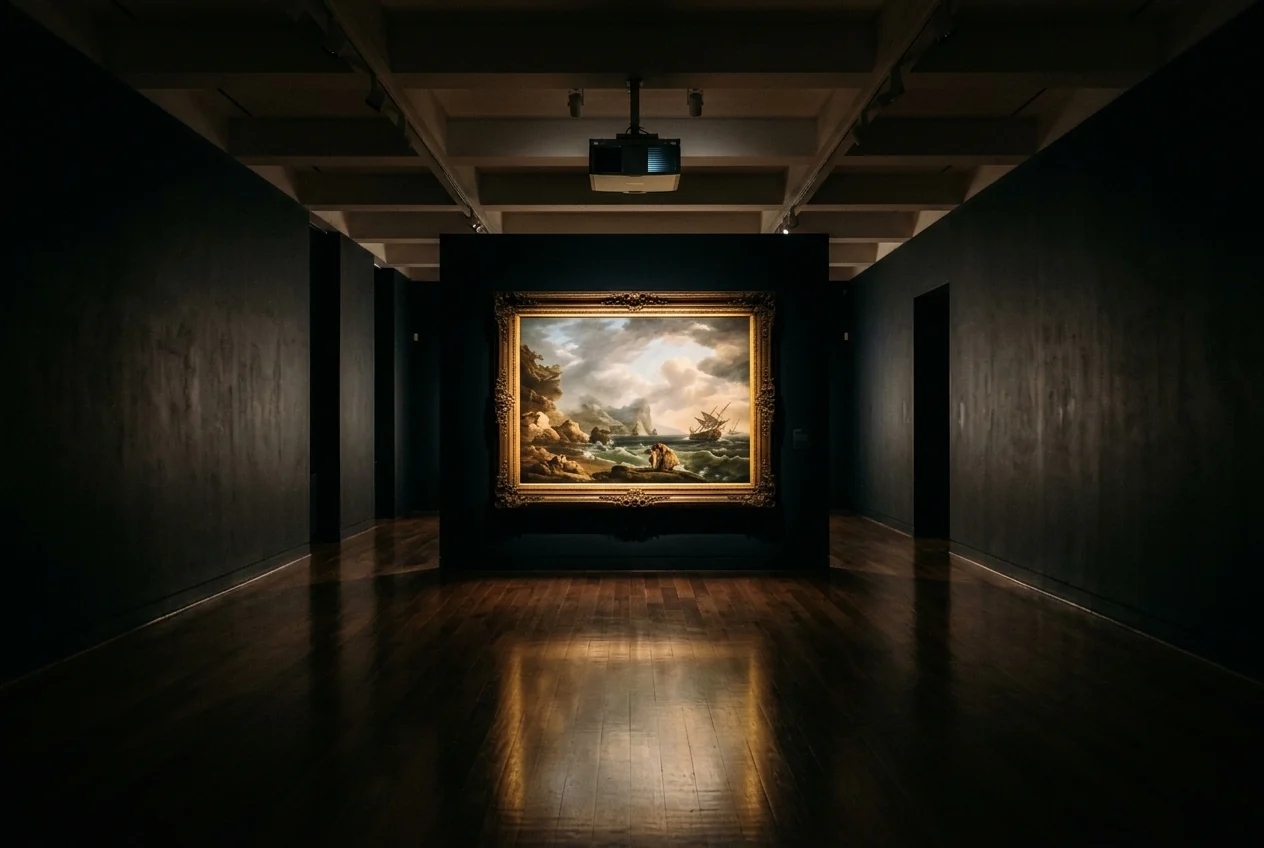
The Conservation Challenge
Light damages art. Ultraviolet radiation causes pigment fading, infrared causes heat damage, and even visible light contributes to photochemical degradation over time. LEDs have revolutionized museum lighting because they produce virtually **zero UV and minimal IR** compared to halogen. But lux levels still matter. Each material category has a maximum exposure limit measured in **lux-hours per year**.
Maximum Lux Levels by Material
| material | max lux | annual exposure | sensitivity |
|---|---|---|---|
| Oil paintings | 150-200 lux | 150,000 lux-hours/yr | Medium |
| Watercolors & prints | 50 lux | 15,000 lux-hours/yr | High |
| Textiles & costumes | 50 lux | 15,000 lux-hours/yr | High |
| Photographs | 50 lux | 15,000 lux-hours/yr | High |
| Sculptures (stone/metal) | 300+ lux | No limit | Low |
| Mixed media | 50 lux | 15,000 lux-hours/yr | Varies |
CRI 95+ Is Non-Negotiable
Museum-grade LEDs must deliver CRI 95+ with R9 (saturated red) > 90. This ensures oil pigments, fabrics, and skin tones in portraits appear true to the artist's intent. Premium fixtures achieve CRI 97-98. Always request spectral power distribution (SPD) data from the manufacturer.
Track Lighting Design
Museum track systems must be highly flexible. Use **3-circuit track** to group fixtures by zone and control intensity independently. **Framing projectors** with shutters create precise rectangular beams that match artwork dimensions without spilling onto frames or walls. **Adjustable-focus spotlights** switch between narrow (12 degrees) for sculpture and medium (24-36 degrees) for paintings.
Ambient vs Accent Balance
The ideal ratio is **3:1 to 5:1** accent-to-ambient. If the gallery ambient is 50 lux, artwork illumination should be 150-250 lux (for oil paintings). This contrast draws the eye naturally to the artwork. Too little contrast makes the space feel flat; too much creates a dark cave with spotlit islands.