
Back to Academy
Lighting FundamentalsColor Science
CCT & CRI — Color Temperature and Rendering
Why 3000K looks warm and 6000K looks cold — and why CRI matters more than you think.
5 min LEDWORLD Technical Team 601 views
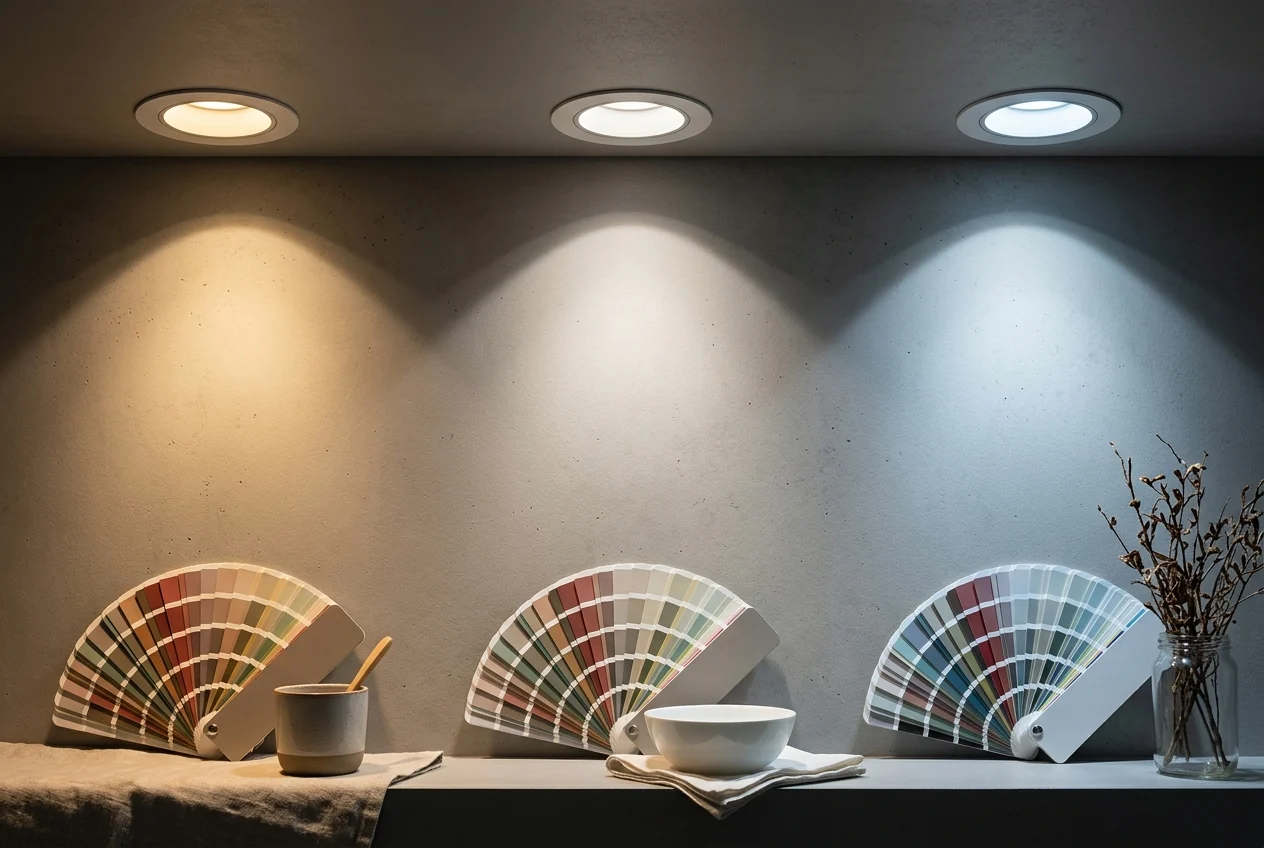

Definitions
CCT (Correlated Color Temperature) is measured in Kelvin (K). Lower = warmer/amber (2700K), higher = cooler/blue (6500K). CRI (Color Rendering Index) scores 0–100 how accurately colors appear under the light vs sunlight. CRI 90+ is considered excellent.
CCT Selection Guide
| application | cct | mood |
|---|---|---|
| Hotel guest rooms | 2700K | Warm, intimate, relaxing |
| Restaurant dining | 2700–3000K | Warm, appetizing, social |
| Office workspace | 3500–4000K | Neutral, alert, productive |
| Retail fashion | 3000–3500K | Flattering, true colors |
| Hospital/clinic | 4000–5000K | Clean, clinical, precise |
| Warehouse/industrial | 4000–5000K | Functional, high visibility |
Why CRI Matters
A CRI of 80 is considered acceptable. But the difference between CRI 80 and CRI 95 is enormous — skin tones appear grey under low CRI, fabrics look flat, food appears unappetizing. For hospitality and retail, CRI 90+ is essential. For art galleries, CRI 95+ is standard.

Before You Specify
Match CCT to the space function — warm for hospitality, neutral for work
Specify CRI 90+ for any space where appearance matters
Request CRI test data from the fixture manufacturer
Consider tunable white (2700–6500K) for multipurpose spaces
Always view CCT samples in the actual space before final selection
Ensure consistent CCT across all fixtures — mixing brands can create visible shifts
Common Mistakes
Mixing 3000K and 4000K fixtures in the same room — creates visible color clash
Using CRI 70 LEDs in hospitality — skin and food look unnatural
Specifying 6000K for residential — feels cold and institutional
Ignoring R9 value — CRI can be 80 but still render reds poorly
Related Tools
Frequently Asked Questions
Related Articles
CCTCRIcolor temperaturecolor renderingKelvinfundamentals