Back to Academy
Regional GCC GuidesDesert Protection

Sand Ingress Protection in Desert Environments

Fine desert sand penetrates IP54 fixtures. Here's why IP65+ is the minimum for GCC outdoor.
5 min LEDWORLD Technical Team 316 views
Sand Ingress Protection in Desert Environments
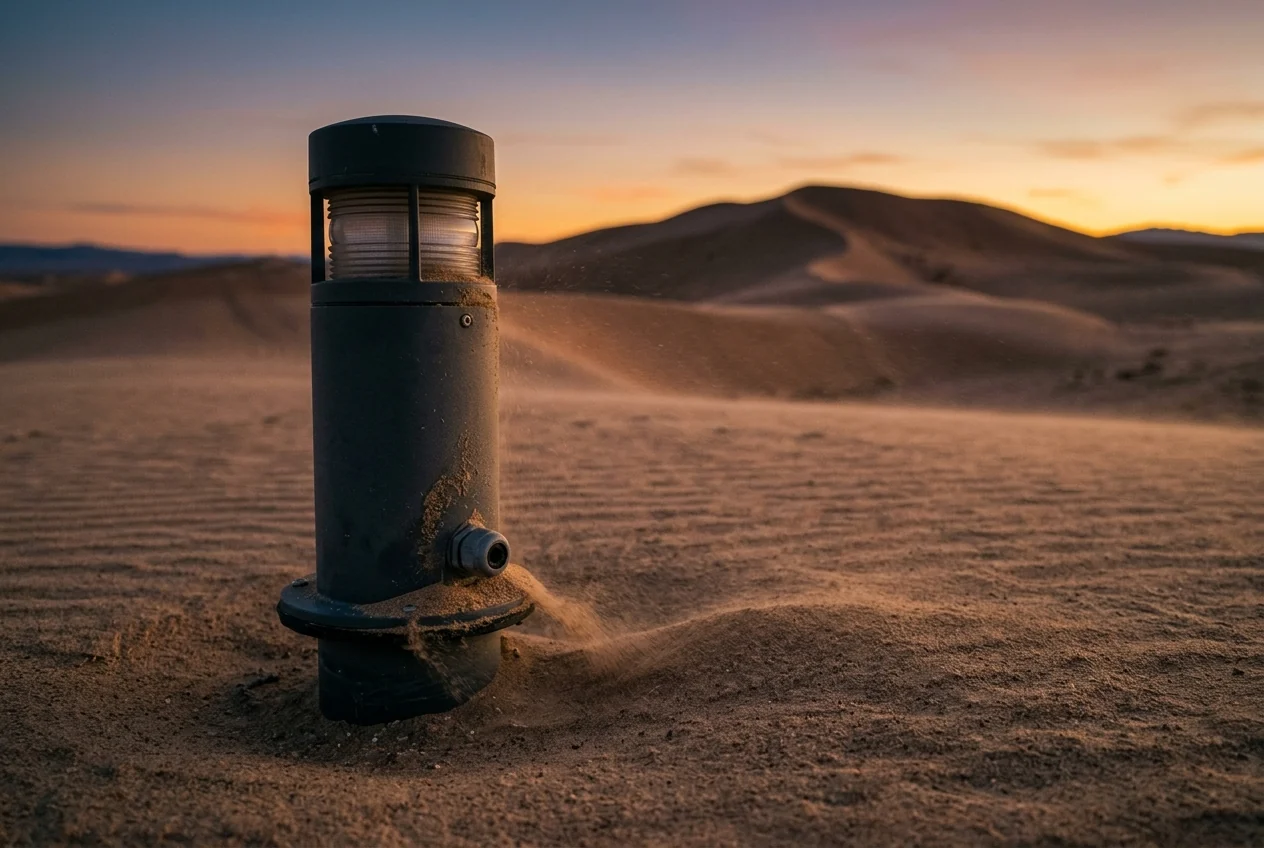
A sandstorm approaching a Gulf city — these conditions test outdoor lighting beyond European specifications.

The Problem

Arabian desert sand particles average 50–100 microns — fine enough to penetrate IP54 rated fixtures. Standard European 'dust-protected' ratings aren't sufficient for GCC conditions. IP6X (dust-tight) is the minimum first digit required.

Sand vs Dust

IP5X means 'dust-protected' — limited ingress permitted that doesn't affect function. IP6X means 'dust-tight' — no ingress of dust at all. In the GCC, sand ingress causes: optical surface abrasion (reduced light output), reflector contamination, heat sink blockage (causing thermal failure), and accelerated wear on seals and gaskets.

IP Rating Performance in GCC

ratinggcc performanceissue
IP44Fails within monthsSand freely enters
IP54Degrades in 1-2 yearsFine sand penetrates 'dust-protected' rating
IP65Good — 5+ yearsDust-tight, water jet proof
IP66Excellent — 8+ yearsDust-tight, powerful water jets
IP67Premium — 10+ yearsFully sealed against immersion

Sand Abrasion on Optics

Even with IP65+ sealing, sand blown against fixture lenses causes surface abrasion over time. Tempered glass lenses resist abrasion far better than polycarbonate. For fixtures in exposed positions, specify tempered glass with AR (anti-reflective) coating. Polycarbonate yellows and becomes opaque within 3–5 years in GCC UV + sand conditions.

GCC Desert Specification Checklist

IP65 minimum for all outdoor fixtures (IP66 recommended)
First digit MUST be 6 (dust-tight) — IP54 is insufficient
Tempered glass lenses — polycarbonate degrades in sand/UV
Silicone gaskets and seals — rubber fails in GCC conditions
Specify fixtures tested to IEC 60529 with fine sand (not just European lab dust)
Plan annual cleaning schedule — even sealed fixtures accumulate external sand
Use self-cleaning fixture designs where possible (smooth, angled surfaces)

Common Mistakes

Assuming IP54 is 'outdoor rated' — it's not sufficient for GCC sand conditions
Polycarbonate lenses in exposed locations — sand abrades surface within 2 years
Not cleaning exterior sand accumulation — blocks light output by 20-40%
Rubber seals in desert conditions — UV and heat degrade within 18 months
Accepting European test certifications without GCC-specific validation

Related Tools

Frequently Asked Questions

sanddesertIP ratingdustGCCingress protectionoutdoor

Planning a facade lighting project?

LEDWORLD has completed 6,000+ lighting projects across the UAE and GCC. Our team can handle everything from lighting design to supply and installation.

We use cookies to enhance your experience.Privacy Policy