
Back to Academy
Lighting FundamentalsProtection Standards
IP vs IK Ratings — Protection Explained
Understanding ingress protection and impact resistance for outdoor and industrial lighting.
6 min LEDWORLD Technical Team 612 views
Quick Reference
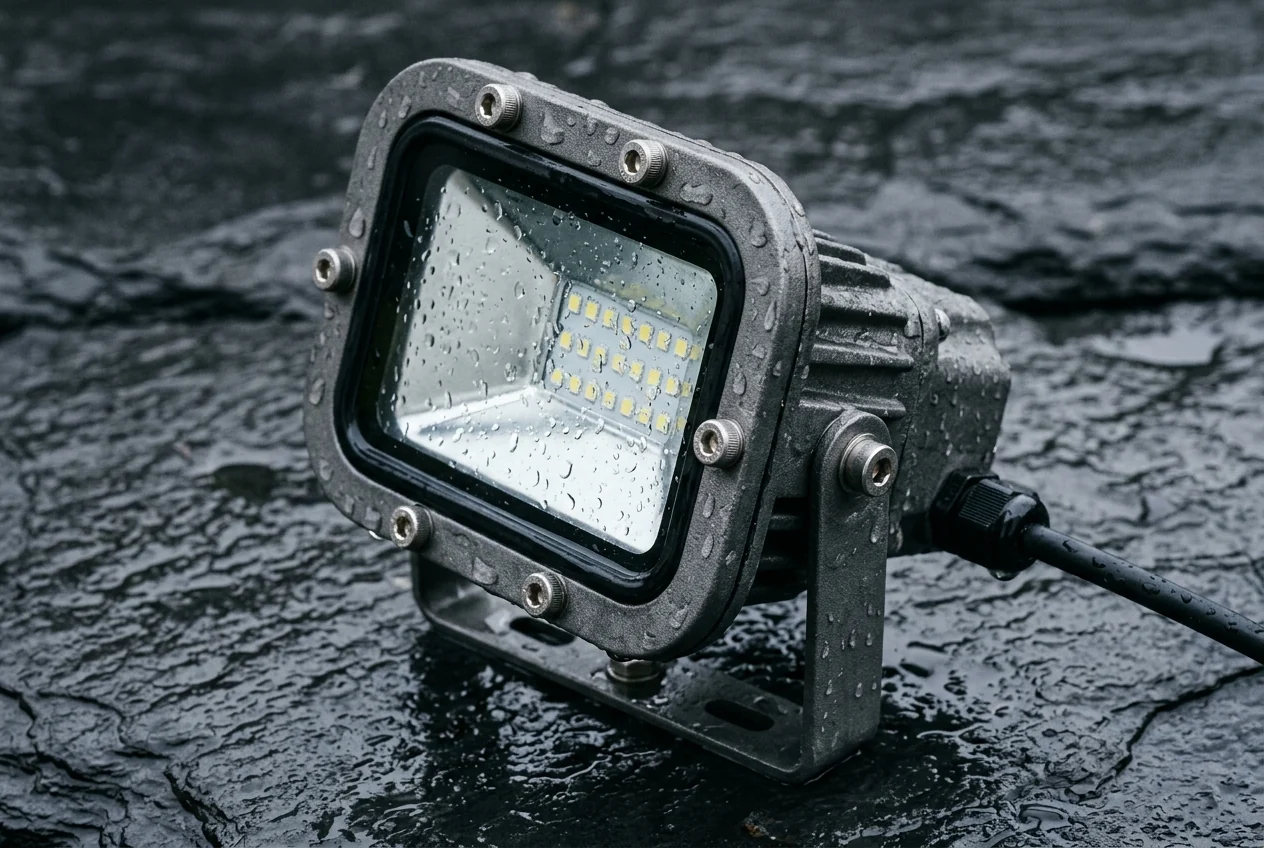
IP rating = Ingress Protection (dust + water). First digit: solids (0-6). Second digit: water (0-9). IK rating = Impact resistance (IK00-IK10). Higher = stronger.
IP Rating Breakdown
| rating | protection | use case |
|---|---|---|
| IP20 | No water protection | Indoor, dry areas only |
| IP44 | Splash-proof | Covered outdoor, bathrooms |
| IP54 | Dust-protected, splash-proof | Semi-exposed outdoor |
| IP65 | Dust-tight, water jet proof | Outdoor, landscape, facade |
| IP67 | Dust-tight, temporary immersion | In-ground, fountain |
| IP68 | Dust-tight, continuous immersion | Underwater, pool |
GCC-Specific Considerations
In the UAE and GCC, outdoor installations face extreme heat (50°C+), sand storms, coastal salt spray, and occasional washdown cleaning. Standard IP54 is rarely sufficient for true outdoor use. We recommend IP65 minimum for all exterior installations, and IP67 for in-ground or coastal applications.
Before You Specify
Assess the environment: indoor, outdoor, coastal, washdown?
Check local building codes for minimum IP requirements
Consider cleaning methods — washdown requires IP65+
For coastal projects: add corrosion-resistant housings
Don't forget IK rating for public and ground-level fixtures
Common Mistakes
Using IP44 fixtures outdoors in GCC — sand ingress fails in months
Ignoring IK rating for ground-recessed lights in public areas
Assuming IP65 = underwater rated (it's not, use IP67/68)
Not considering sand ingress separately from water protection
Related Tools
Frequently Asked Questions
Related Articles
IP ratingIK ratingoutdoorprotectioncoastalGCC