
Coastal Corrosion Management in GCC
Why standard aluminum fixtures fail within 18 months near the Gulf — and what to use instead.
The GCC Coastal Challenge
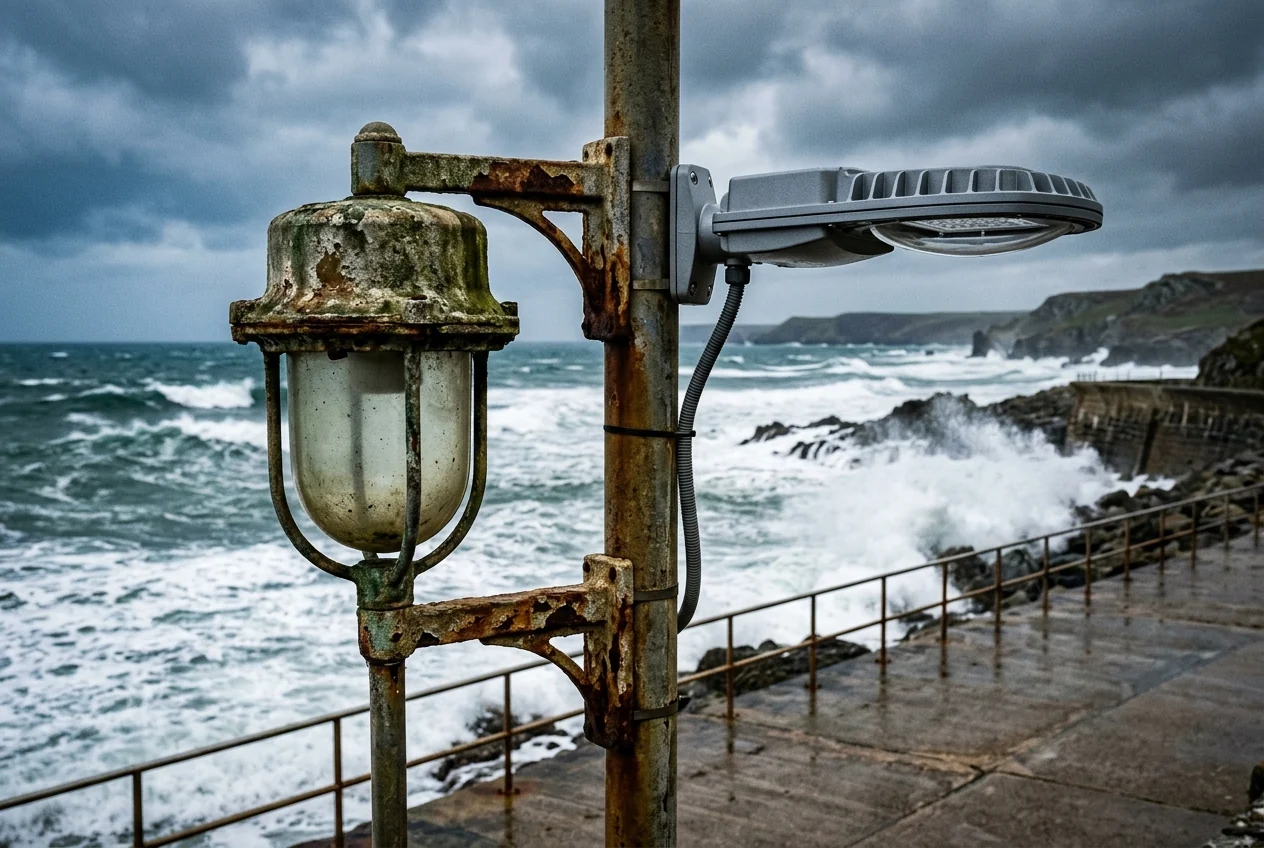
Coastal areas in UAE, Qatar, Kuwait, and Saudi Arabia combine high humidity (80–95%), salt spray, extreme heat (50°C+), and sand abrasion — the most aggressive combination for metal corrosion worldwide.
Material Selection for GCC Coastal
| material | life | rating | notes |
|---|---|---|---|
| Standard aluminum (painted) | 12–18 months | Not recommended | Corrodes under paint, peeling |
| Marine-grade aluminum (anodized) | 5–8 years | Good | Hard anodize + powder coat |
| 316 Stainless steel | 10–15+ years | Excellent | Best for fixtures and brackets |
| 316L Stainless steel | 15+ years | Premium | For critical coastal installations |
| GRP/Composite | 15+ years | Excellent | Poles and mounting structures |
The 5km Rule
Within 5km of the coastline, standard outdoor specifications are inadequate. Every metal component — housings, brackets, screws, cable glands — must be rated for marine environments. A single stainless steel fixture mounted with galvanized screws will still fail because the screws corrode.
Galvanic Corrosion
When dissimilar metals contact each other in a corrosive environment, galvanic corrosion accelerates. Never combine aluminum fixtures with stainless steel screws without insulating washers. Use matching metals throughout or isolate contact points.