
Outdoor Fixture Installation — Weatherproofing Methods
Sealing, mounting, and cabling for exterior lighting that lasts.
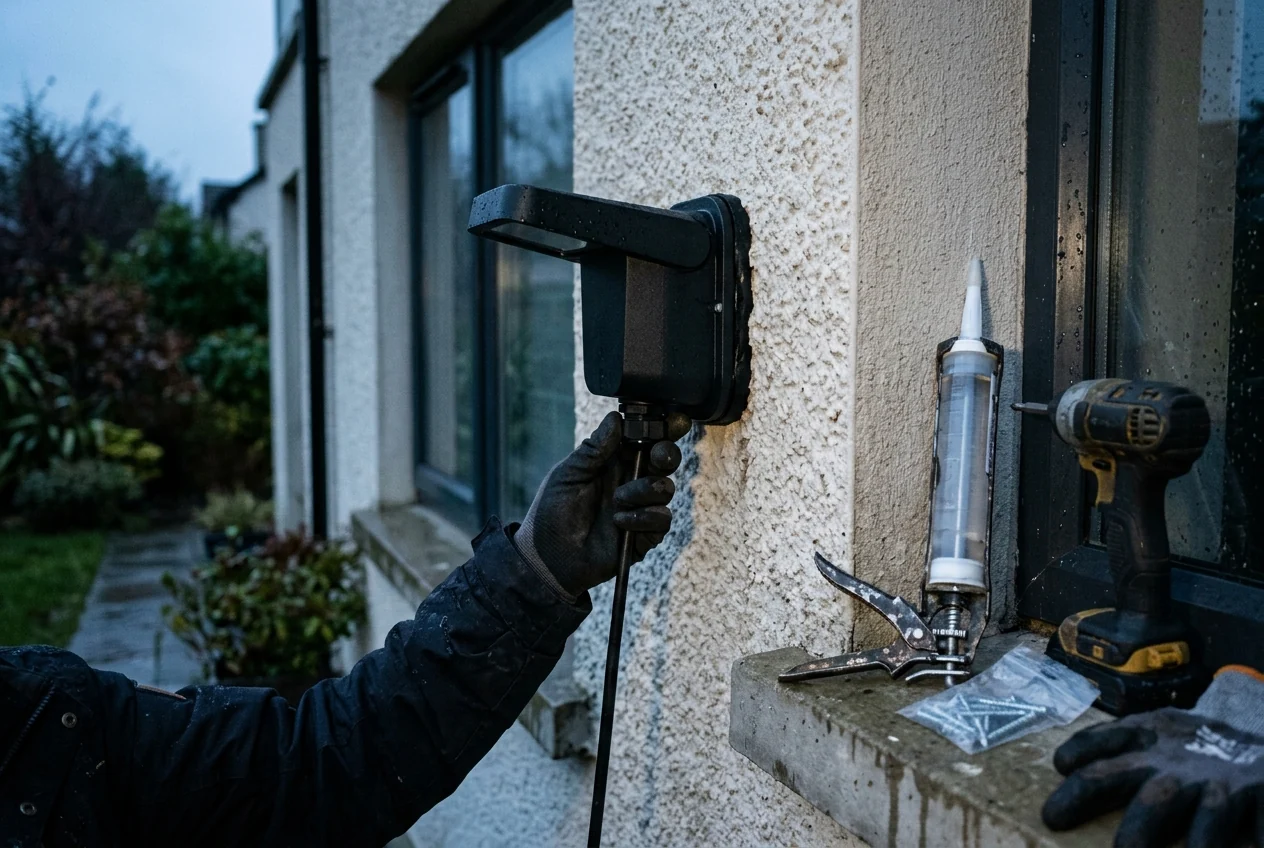
Weatherproofing Methods
| method | where | notes |
|---|---|---|
| Cable glands (IP68) | All cable entries | Tighten to spec — too loose = water ingress |
| Silicone sealant | Junction box lids, gaps | Use neutral-cure silicone only (not acetic acid) |
| Drip loops | Cable runs entering fixtures | Water runs down cable, drip loop diverts it away |
| Breather valves | Sealed fixture housings | Prevents condensation buildup inside |
| Conduit sealing | End of conduit runs | Prevents water wicking through conduit |
The Drip Loop
Every cable entering an outdoor fixture should form a drip loop — a U-shaped dip below the entry point. Water running down the cable reaches the lowest point of the loop and drips off instead of entering the fixture. This simple technique prevents 80% of water ingress issues.
Mounting Considerations
All mounting hardware must match the fixture material grade. Stainless steel brackets with galvanized bolts = galvanic corrosion. Use nylon washers between dissimilar metals. For ground-recessed fixtures, ensure drainage gravel beneath the housing — standing water degrades seals faster.
GCC-Specific Requirements
In the GCC, outdoor installations face UV degradation of cable insulation and conduit. Use UV-stabilized conduit and cable rated for high-temperature outdoor use. Schedule installations during cooler months when possible — adhesives, sealants, and gaskets perform better during application at temperatures below 40°C.