
LEED v5 — Lighting Credits & Energy Compliance
What changed in LEED v5 for lighting: daylight, glare, LPD, controls, and light pollution reduction.
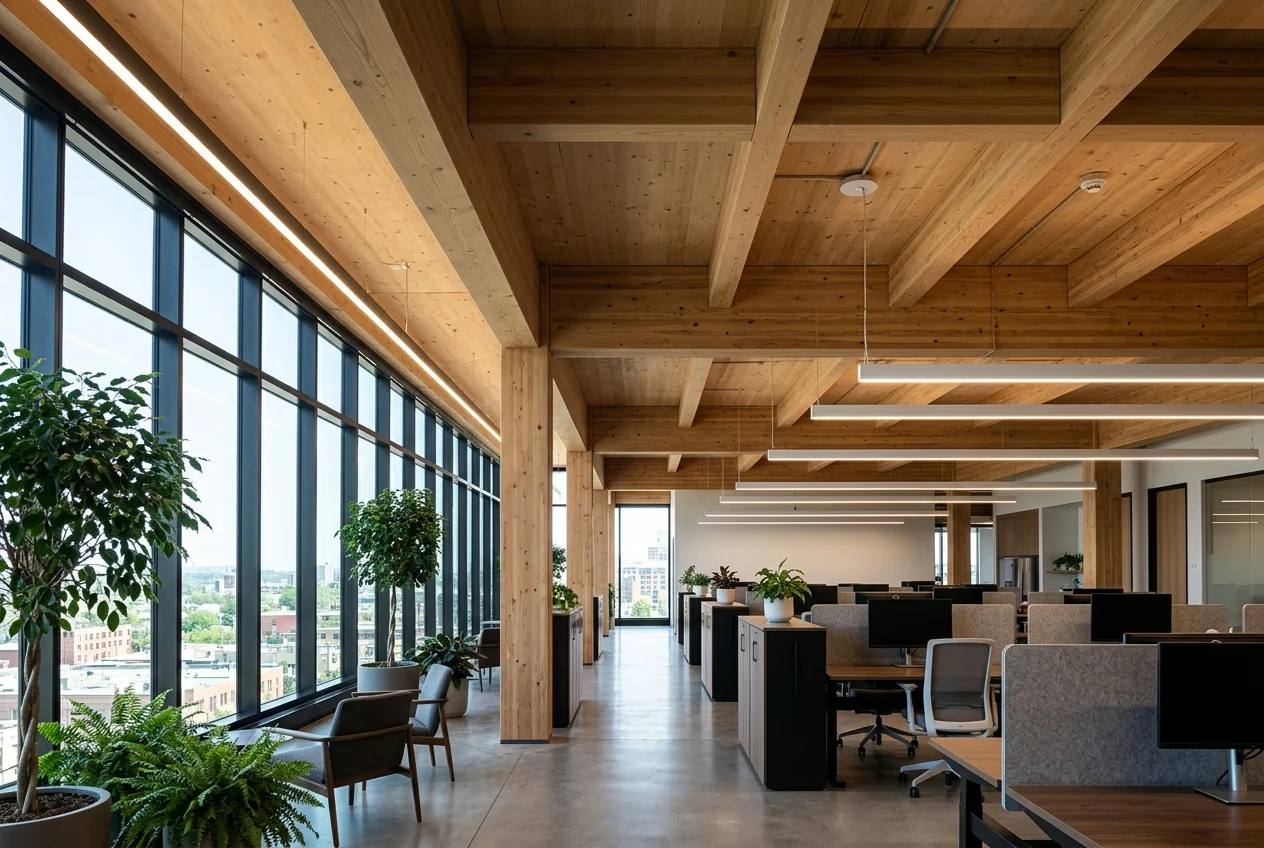
LEED v5 — Key Lighting Changes
LEED v5, released in 2024/2025, brings significant updates to how lighting impacts green building certification. The changes emphasize not just energy efficiency but occupant well-being, environmental impact, and smart systems integration. Major lighting-related changes: • New 'Lighting Environment' credit under Indoor Environmental Quality (IEQ) — focusing on visual comfort, not just lux levels. • Stricter energy baselines aligned with ASHRAE 90.1-2022 — lower Lighting Power Density (LPD) limits. • Expanded Light Pollution Reduction credit — now covers more outdoor fixture types and zones. • Greater emphasis on daylight access and views — strengthened connection to nature. • Smart, grid-interactive lighting systems earn additional points. • All-electric buildings required for highest certification levels (Platinum).
LEED v5 Lighting-Related Credits
| 0 | 1 | 2 | 3 |
|---|---|---|---|
| Energy | Optimize Energy Performance | LPD reduction below ASHRAE baseline | Up to 18 |
| Energy | Enhanced Commissioning | Lighting controls verification | Up to 6 |
| Energy | Grid Harmonization | Demand response, load shifting | Up to 2 |
| IEQ | Lighting Environment | Visual comfort, daylight, glare | Up to 2 |
| IEQ | Daylight | sDA ≥ 55% in occupied spaces | Up to 3 |
| IEQ | Quality Views | Direct line of sight to exterior | Up to 3 |
| SS | Light Pollution Reduction | Outdoor lighting control, ULOR | 1 |
| IEQ | Connecting with Nature | Biophilic elements including natural light | Up to 2 |
Lighting Power Density (LPD)
LEED v5 uses ASHRAE 90.1-2022 as the baseline for energy modeling. LPD limits have been reduced compared to v4.1, meaning designers must use more efficient luminaires and smarter control strategies. Selected ASHRAE 90.1-2022 LPD values (building area method): • Office: 0.64 W/ft² (6.9 W/m²) • Retail: 0.84 W/ft² (9.0 W/m²) • Healthcare: 0.78 W/ft² (8.4 W/m²) • Hotel: 0.56 W/ft² (6.0 W/m²) • Warehouse: 0.45 W/ft² (4.8 W/m²) To earn energy optimization points, you must demonstrate LPD reductions of 25-50%+ below the baseline. This is achievable with high-efficacy LED fixtures (>130 lm/W) combined with daylight harvesting, occupancy sensing, and task-tuning controls.
Daylight & Views
LEED v5 strengthens daylight requirements: • Spatial Daylight Autonomy (sDA): 55% of regularly occupied floor area must achieve sDA300/50 — meaning at least 300 lux from daylight for at least 50% of annual occupied hours. • Annual Sunlight Exposure (ASE): ≤ 10% of floor area should receive more than 1000 lux of direct sunlight for more than 250 hours — controlling excessive glare and overheating. • Daylight simulation using approved software (Radiance-based) is required. For GCC projects with intense sunlight, achieving high sDA while controlling ASE requires careful facade design — deep reveals, external shading, high-performance glass, and automated blinds.
Light Pollution Reduction
The Light Pollution Reduction credit now requires: • All exterior luminaires ≤ BUG rating limits for the applicable lighting zone (LZ0-LZ4). • No luminaire may emit light above 90° from nadir (zero uplight). • Interior lighting visible from exterior must be controlled by automatic shutoff or daylight sensors after hours. For GCC developments, this is particularly relevant for: • Resort and hospitality projects near natural areas or coastlines. • Urban developments adjacent to residential zones. • Projects seeking Estidama Pearl ratings (which have similar outdoor lighting requirements).