
IDA Dark Sky Compliance — Light Pollution Prevention
Designing outdoor lighting that protects the night sky while meeting safety and aesthetic requirements.
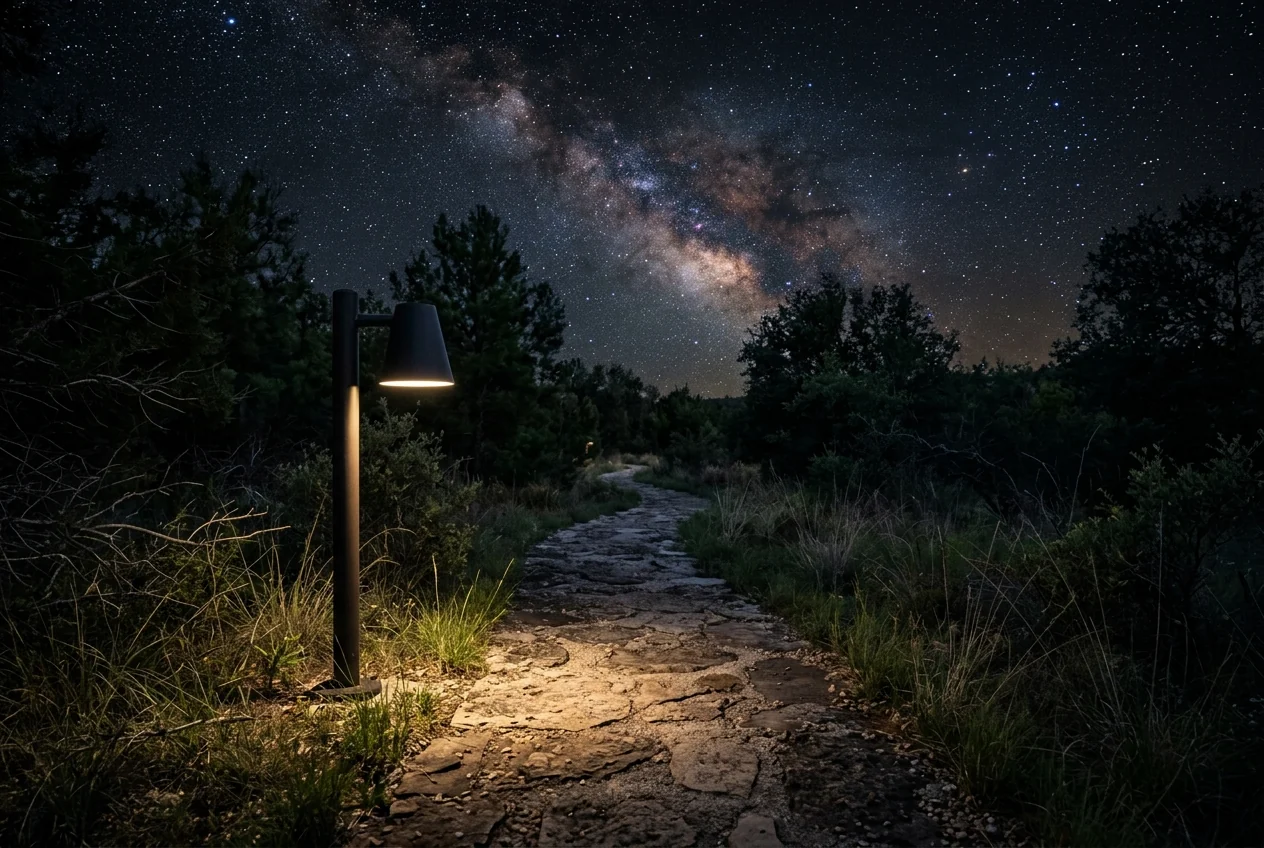
What Is Light Pollution?
Light pollution is the excessive, misdirected, or obtrusive use of artificial light at night. It encompasses: • Skyglow: Brightening of the night sky over populated areas, visible for hundreds of kilometers. • Glare: Excessive brightness causing visual discomfort and reduced visibility. • Light trespass: Light falling where it's not intended or needed (e.g., into bedroom windows). • Clutter: Excessive groupings of bright lights creating confusion. Light pollution wastes energy, disrupts ecosystems (migratory birds, sea turtles, insects), affects human circadian health, and eliminates our view of the stars. The International Dark-Sky Association (IDA) — now DarkSky International — leads global efforts to combat it through standards, education, and certification programs.
BUG Rating System
The BUG (Backlight, Uplight, Glare) rating system, defined in IES TM-15, classifies outdoor luminaire light distribution in three zones: • Backlight (B0-B5): Light emitted behind the luminaire (toward the property it's mounted on). Higher values mean more backlight. • Uplight (U0-U5): Light emitted above horizontal. U0 = zero uplight (ideal). Even U1 allows some uplight that contributes to skyglow. • Glare (G0-G5): Forward high-angle light that can cause glare to pedestrians and drivers. The IES/IDA Model Lighting Ordinance specifies maximum BUG values for each Lighting Zone (LZ0-LZ4): • LZ0 (Wilderness): B1-U0-G0 • LZ1 (Rural/low ambient): B1-U0-G1 • LZ2 (Rural/moderate): B3-U0-G2 • LZ3 (Urban/high ambient): B4-U1-G3 • LZ4 (Urban core/very high): B5-U2-G4
CCT Matters for Dark Sky
Blue-rich light (high CCT, 5000K+) scatters more in the atmosphere, contributing disproportionately to skyglow. DarkSky International recommends outdoor lighting at 3000K or below. Many dark-sky communities mandate ≤ 2700K. For GCC projects near natural areas, coastlines, or wildlife habitats, specifying warm-white (2700-3000K) outdoor lighting is both environmentally responsible and increasingly required.
Design Strategies for Dark-Sky Compliance
Key design principles: 1. Full Cutoff / Fully Shielded: All outdoor fixtures should emit zero light above the horizontal plane (0% ULOR). This is the single most impactful requirement. 2. Target Only What Needs Light: Use precise optics to illuminate the task area without overspill. Asymmetric distributions for roads, sharp cutoff for area lighting. 3. Use the Minimum Necessary: Don't over-light. Meet the standard requirement (EN 12464-2, AS/NZS 1158) without exceeding it. More light does not always mean more safety. 4. Control Timing: Use dimmers, timers, and motion sensors to reduce or extinguish lighting when areas are unoccupied. Curfew dimming (e.g., 50% after midnight) dramatically reduces light pollution. 5. Warm Color Temperature: Specify ≤ 3000K for all outdoor luminaires. Blue-rich light at 5000K+ produces 2-3x more skyglow than warm-white at 2700K. 6. Adaptive Controls: Motion-activated lighting provides security when needed and darkness when not.