
IES TM-30 — The Modern Standard for Color Rendition
Why CRI alone is not enough, and how TM-30 transforms color specification.
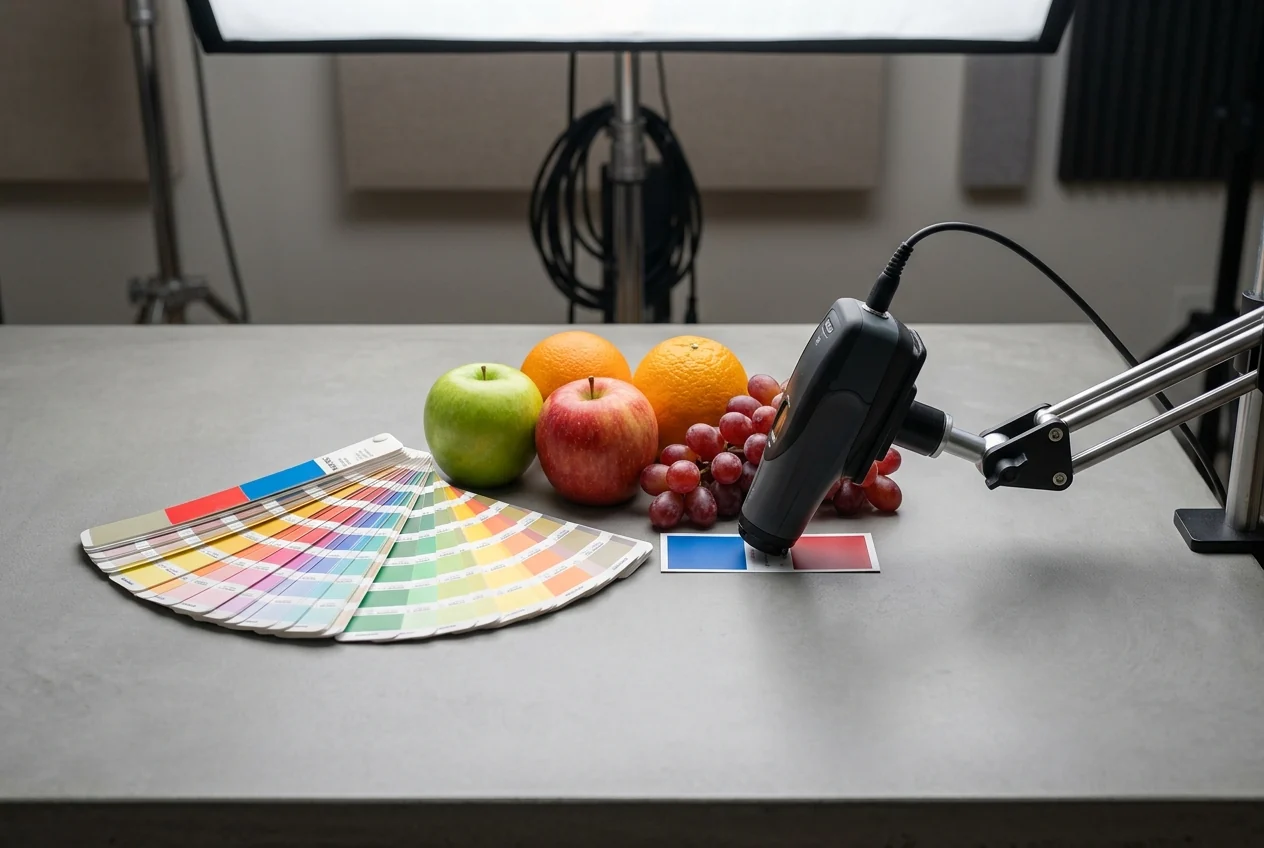
The Problem with CRI
CRI (Color Rendering Index, or Ra) has been the standard metric for evaluating how accurately a light source renders colors since the 1960s. However, it has fundamental limitations that make it inadequate for modern LED specification: • CRI uses only 8 pastel test color samples (R1–R8) — none of which are saturated colors. • It averages these 8 values into a single number, masking poor performance on individual hues. • Two light sources with identical CRI values can render colors very differently. • CRI cannot distinguish between sources that desaturate colors and those that shift hue. • The R9 value (deep red) is often reported separately because it's excluded from the average, but it's just one of many gaps. In practice, a CRI 80 source from one manufacturer can look dramatically different from a CRI 80 source from another. This is why the industry has moved toward IES TM-30.
What Is IES TM-30?
IES TM-30 (latest version: ANSI/IES TM-30-24) is a comprehensive method for evaluating light source color rendition using 99 Color Evaluation Samples (CES) derived from real-world objects — including skin tones, textiles, paints, plastics, printed materials, and natural objects. Unlike CRI's single number, TM-30 provides three primary metrics: 1. Fidelity Index (Rf): How closely colors match a reference illuminant (0–100 scale, similar to CRI but calculated from 99 samples). 2. Gamut Index (Rg): Whether the source increases or decreases color saturation overall (100 = neutral, >100 = more vivid, <100 = muted). 3. Color Vector Graphic: A visual diagram showing exactly how each of 16 hue bins is shifted in both saturation and hue — this is the breakthrough tool for designers.
CRI vs TM-30 Comparison
| 0 | 1 | 2 |
|---|---|---|
| Test Samples | 8 pastel samples (R1-R8) | 99 real-world Color Evaluation Samples |
| Saturated Colors | Not included in average | Fully represented across 16 hue bins |
| Primary Metric | Single average number (0-100) | Rf (fidelity) + Rg (gamut) + Vector Graphic |
| Can Show Hue Shifts? | No — only distance from reference | Yes — direction and magnitude per hue |
| Desaturation vs Shift | Cannot distinguish | Clearly separated in vector graphic |
| Skin Tone Rendering | Partially via R13 (rarely reported) | Multiple skin-tone samples in CES set |
| Standard Version | CIE 13.3 (1995) | ANSI/IES TM-30-24 (updated 2024) |
| Industry Adoption | Universal but declining for LED spec | Growing — required by IES, adopted in WELL, GSA |
Understanding the Color Vector Graphic
The Color Vector Graphic (CVG) is TM-30's most powerful tool. It divides the color space into 16 hue bins and shows, for each bin, whether the light source: • Increases or decreases saturation (arrows pointing outward = more vivid, inward = muted) • Shifts the hue (arrows rotating clockwise or counterclockwise) The black circle represents the reference illuminant (perfect fidelity). The red shape shows the actual performance of the evaluated source. Where the red shape extends beyond the black circle, colors in that hue range appear more saturated. Where it falls inside, colors appear duller. This is invaluable for application-specific specification: • Retail: You may want Rg > 100 with increased saturation in red and green hue bins to make merchandise 'pop'. • Healthcare: You want Rf > 90 with minimal shifts — accurate skin tone rendering is critical for patient assessment. • Hospitality: Warm, slightly enhanced reds and oranges (hue bins 1-3) create a flattering, inviting atmosphere.
TM-30 Specification Guide (Annex E)
IES TM-30-24 Annex E provides three specification frameworks: • Fidelity Priority (Rf ≥ 85, Rg 95-105): For spaces requiring accurate color — healthcare, art galleries, color-critical retail. • Preference Priority (Rf ≥ 78, Rg 100-115, with positive Rcs,h1 for reds): For spaces where 'pleasing' color matters more than accuracy — hospitality, restaurants, residential. • Vividness Priority (Rg ≥ 110-118): For retail displays, exhibition spaces — makes colors appear more saturated and appealing.
TM-30 in Practice — Application Guidelines
When specifying using TM-30, consider these application-specific recommendations: Healthcare & Clinical: Rf ≥ 90, Rg 97-103. Skin tone fidelity (hue bins 1-2, 15-16) is critical. Avoid sources that shift red-orange hues, as this affects clinical assessment of patient skin color, bruising, and cyanosis. Retail & Fashion: Rf ≥ 80, Rg 105-115. Enhanced saturation in hue bins 1 (red), 11-12 (green/cyan) makes products visually appealing. Fast-fashion retailers often prefer higher Rg values. Museums & Galleries: Rf ≥ 95, Rg 98-102. Maximum fidelity with minimal saturation shifts. Conservation also requires UV-free, low-IR sources. Hospitality & F&B: Rf ≥ 80, Rg 100-110. Slight enhancement of warm tones (hue bins 1-3) creates a flattering atmosphere. Food appears more appetizing with enhanced red-orange rendering. Office & Education: Rf ≥ 85, Rg 97-105. Balance between accurate rendering and visual comfort. Pair with appropriate CCT (3500K-4000K for offices, 4000K-5000K for task-heavy education).
How to Request TM-30 Data from Manufacturers
Not all manufacturers provide TM-30 data yet, but the trend is accelerating. When requesting data: 1. Ask for the full TM-30 report, not just Rf — you need the Color Vector Graphic and Rg value. 2. Request data at the specific CCT you're specifying — color rendition varies with color temperature. 3. For dimming applications, ask for TM-30 data at multiple dimming levels — some phosphor-converted LEDs shift color rendition when dimmed. 4. Compare products using the same reference illuminant — TM-30 uses Planckian (blackbody) for CCT ≤ 4500K and CIE Daylight for CCT > 5000K. 5. Leading manufacturers like LEDWORLD provide TM-30 data in their technical datasheets and upon request for project-specific evaluation.