
Fire-Rated Lighting — Intumescent Housings & Safety Standards
Maintaining fire compartment integrity with recessed LED luminaires: ratings, installation, and compliance.
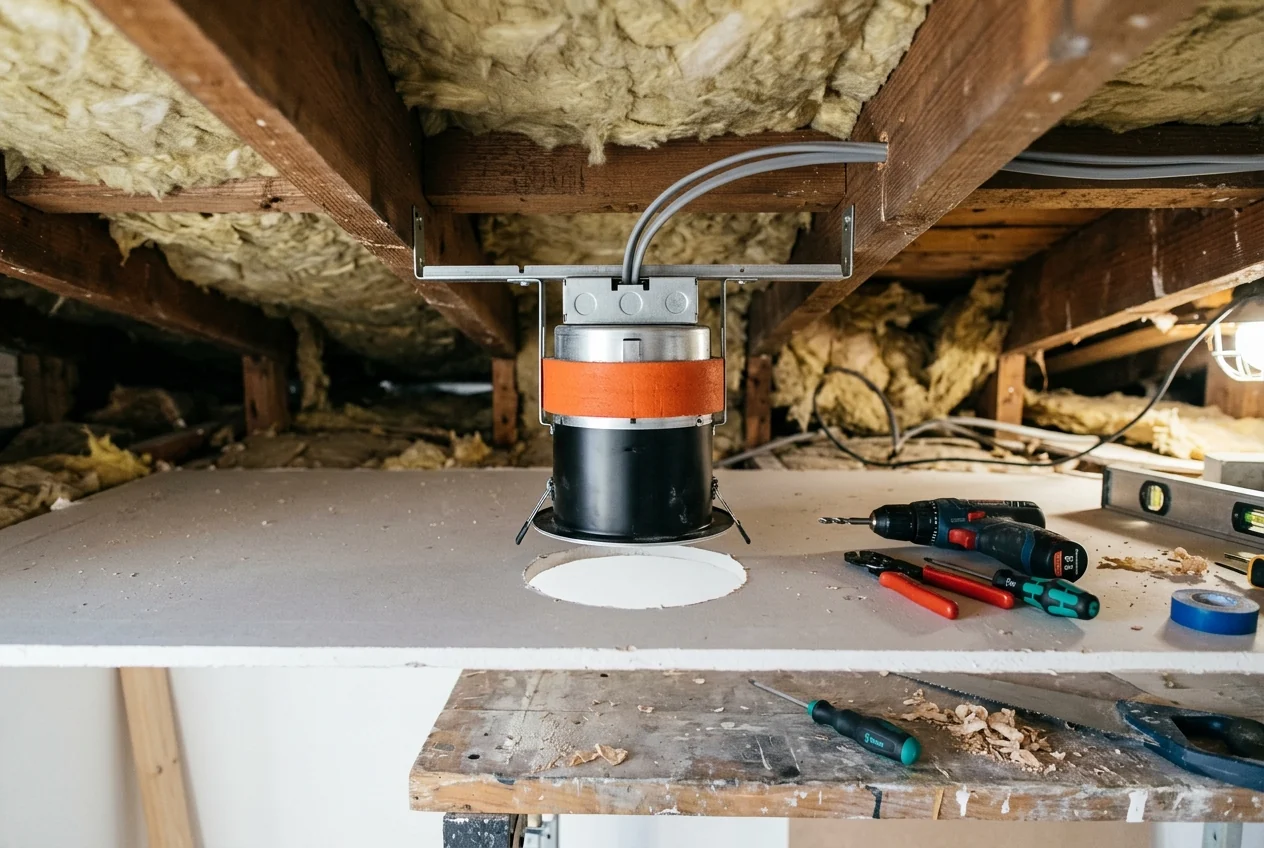
Why Fire Rating Matters for Recessed Lighting
When you cut a hole in a ceiling for a recessed downlight, you compromise the fire compartment barrier. In a fire, hot gases and flames can penetrate through this opening, spreading fire between floors or compartments. Fire-rated construction requires that penetrations through fire-rated ceilings maintain the same fire resistance as the surrounding construction — typically 30, 60, or 90 minutes. Solutions: 1. Fire-rated luminaires: Fixtures with integral intumescent pads or fire barriers that expand in heat, sealing the opening. 2. Fire hoods/covers: Separate intumescent or mineral wool covers installed above standard luminaires. 3. Fire-rated ceiling systems: Some suspended ceiling systems provide fire rating at the ceiling plane, allowing standard luminaires above.
Fire Rating Options for Recessed Luminaires
| 0 | 1 | 2 | 3 |
|---|---|---|---|
| Integral fire-rated downlight | 30-90 minutes | Single product install | 10-30% premium on fixture |
| Intumescent fire hood (retrofit) | 30-90 minutes | Installed above standard luminaire | Low per unit, labor-intensive |
| Mineral wool fire hood | 30-60 minutes | Covers luminaire from above | Low cost, bulky |
| Fire-rated ceiling system | 30-120 minutes | Rating at ceiling plane | System cost, allows any luminaire |
| Intumescent paint/wrap | 30 minutes | Applied to ceiling void around fixture | Low cost, variable quality |
CIBSE LF12 (2026) — Thermoplastic Diffusers
The February 2026 CIBSE Lighting Factfile LF12 addresses fire safety concerns around thermoplastic diffusers in LED luminaires. Key points: • Thermoplastic diffusers (polycarbonate, acrylic) are common in LED panels and troffers for their optical performance and light weight. • In a fire, some thermoplastics can melt and drip, potentially spreading fire or creating burning droplets. • LF12 recommends: verify the fire classification of diffuser materials (EN 13501-1), use materials rated B-s1,d0 or better in means of escape and fire-rated areas, and consider mineral-based or fire-retardant polymer alternatives in high-risk locations. • For general office ceilings below fire-rated slabs: standard thermoplastic diffusers are typically acceptable within the overall fire strategy, but verify with the fire engineer.