
Daylight & Electric Light Integration — sDA, ASE & Hybrid Design
Designing lighting systems that seamlessly blend natural and artificial light for energy efficiency and occupant wellness.
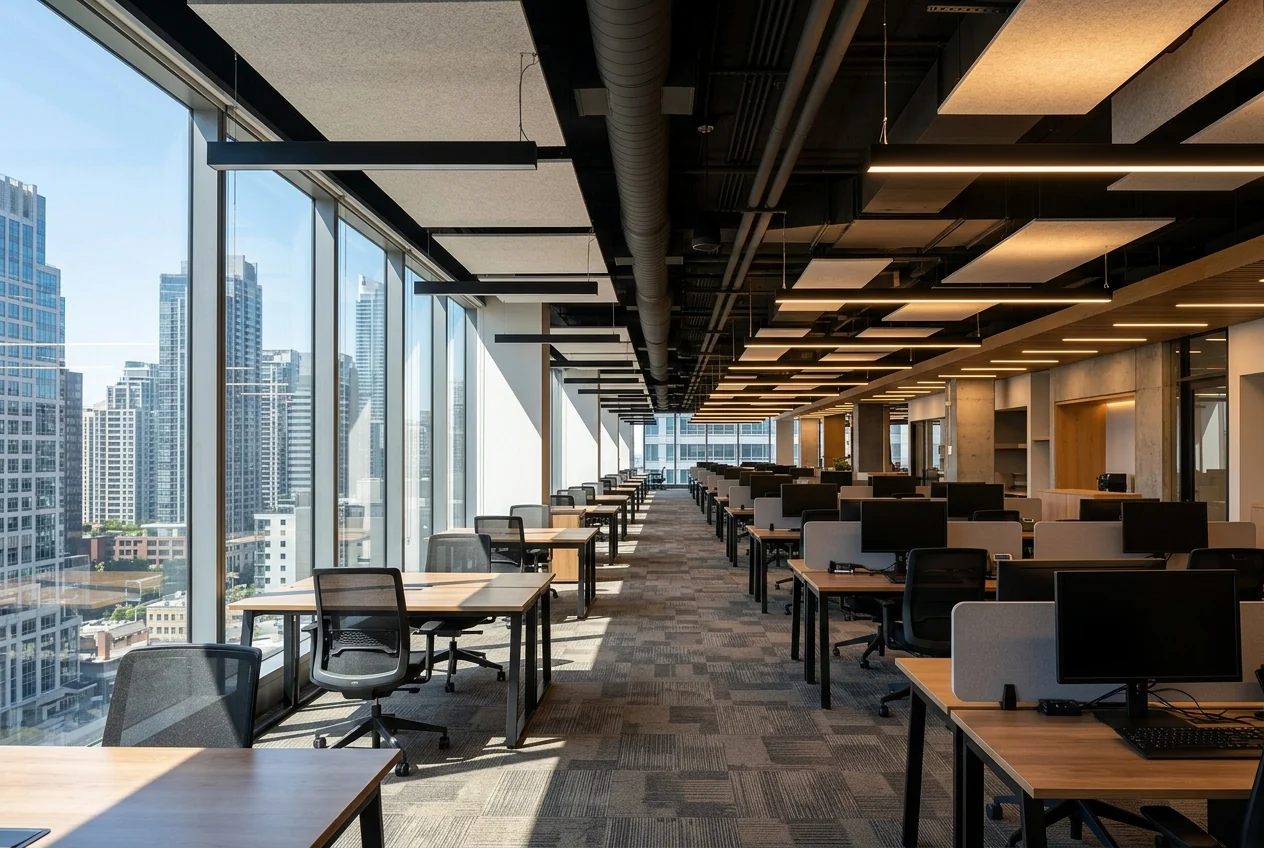
Why Daylight Integration Matters
Daylight is the gold standard for visual quality, color rendering, and circadian stimulation. Integrating daylight with electric lighting achieves three goals simultaneously: 1. Energy savings: Daylight harvesting can reduce lighting energy consumption by 30-60% in perimeter zones. 2. Occupant wellness: Daylight provides full-spectrum, melanopic-rich light that supports circadian health (m-EDI ratio = 1.0 for D65). 3. Visual quality: Natural light creates dynamic, pleasant environments that occupants consistently prefer over electric-only spaces. However, in the GCC, daylight integration presents unique challenges — extreme solar intensity (100,000+ lux), high cooling loads from solar gain, intense glare, and UV degradation of materials require careful balancing.
Key Daylight Metrics
| 0 | 1 | 2 | 3 |
|---|---|---|---|
| Daylight Factor (DF) | Ratio of indoor to outdoor illuminance (overcast sky) | 2-5% for offices | CIBSE, BS 8206 |
| sDA (Spatial Daylight Autonomy) | % of floor area achieving ≥ 300 lux for ≥ 50% of occupied hours | ≥ 55% for LEED | IES LM-83 |
| ASE (Annual Sunlight Exposure) | % of area receiving > 1000 lux direct sun for > 250 hours | ≤ 10% | IES LM-83, LEED |
| UDI (Useful Daylight Illuminance) | % of time daylight is between 100-3000 lux | > 50% | Research metric |
| m-EDI from daylight | Melanopic stimulation from natural light | Maximized during day | CIE S 026, WELL |
Daylight Harvesting Controls
Daylight harvesting uses photosensors to automatically dim or switch electric lighting in response to available daylight. This is the primary energy savings mechanism. Key components: • Photosensors: Mounted on the ceiling, measuring reflected light from the task plane. Closed-loop sensors respond to the total light (daylight + electric). Open-loop sensors face the window and measure daylight only. • Control zones: Perimeter zones (within 4.5m of windows) are controlled separately from interior zones. Multiple parallel rows allow graduated dimming. • Commissioning: Photosensor set-points must be calibrated on-site for each zone — this is the step most often skipped and the #1 cause of daylight harvesting complaints. Energy code requirements (ASHRAE 90.1-2022): Automatic daylight-responsive controls are mandatory in daylit zones with installed lighting power > 150W. LEED v5 awards points for exceeding baseline requirements.
GCC-Specific Daylight Strategies
Designing for daylight in the GCC requires managing extremely high solar loads: • External shading: Deep reveals (600mm+), horizontal overhangs, and vertical fins are essential. External shading blocks solar heat before it enters the glass — far more effective than internal blinds. • High-performance glazing: Low-E, solar-control glass with visible light transmittance (VLT) 30-50% and solar heat gain coefficient (SHGC) < 0.30. • Light shelves: Horizontal reflective surfaces at window head height bounce daylight deeper into the space while shading the lower window area. • Clerestory windows: High-level glazing above the visual field brings daylight deep into the space without direct glare. • Automated blinds: Essential for east and west facades where solar angles are low and shading geometry can't fully control penetration. • Transition zones: Entrances from 100,000 lux exterior to 500 lux interior need graduated adaptation — design buffer zones at 1,000-3,000 lux.