
Lighting Layers — Ambient, Task & Accent
The layered approach that separates professional lighting from flat, uniform illumination.
The Three Layers
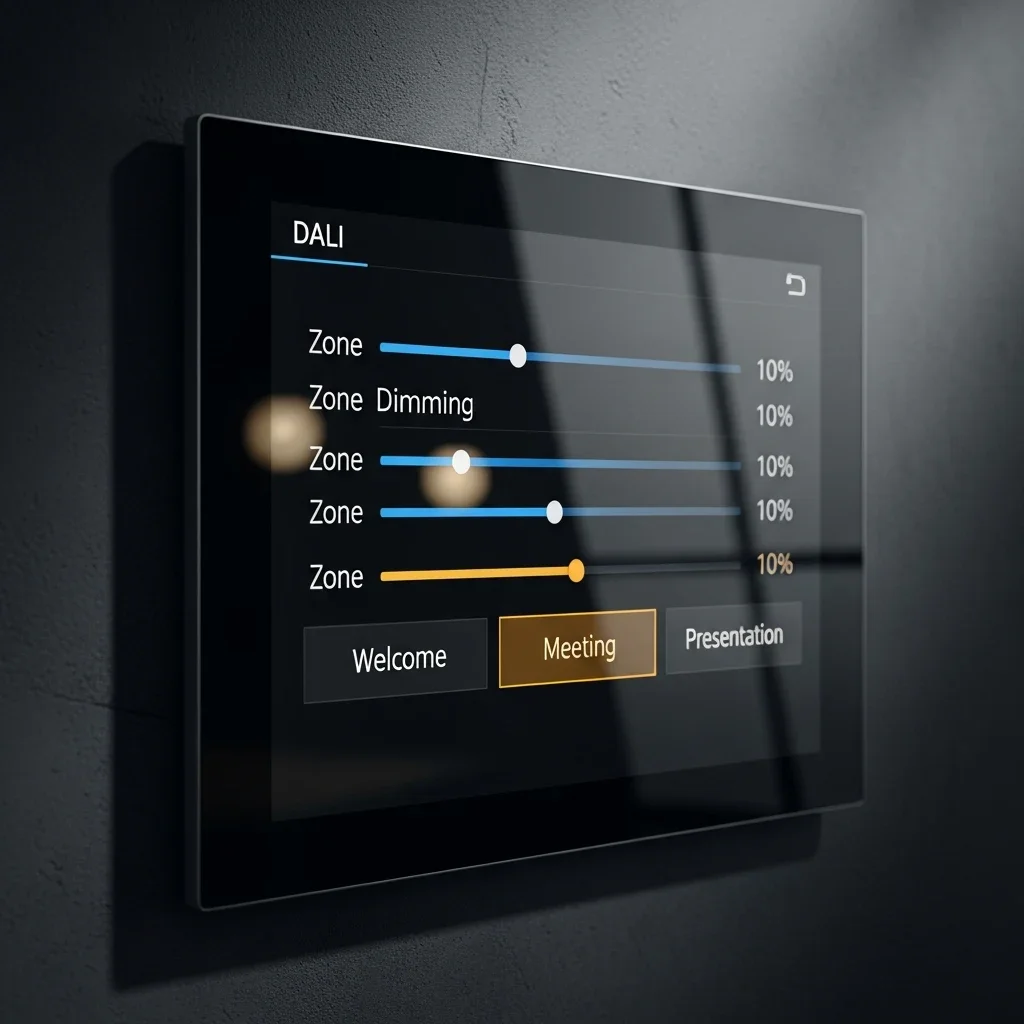
Ambient = general room fill (60–70% of light). Task = focused work light (20–30%). Accent = drama and feature highlighting (10–20%). Great rooms use all three. Bad rooms use only one.
Layer Planning Guide
| layer | purpose | fixtures | control |
|---|---|---|---|
| Ambient | General illumination | Downlights, cove lighting, pendants | Dimmed to 60–80% |
| Task | Work and reading | Under-cabinet, desk lamps, reading lights | On/off or local dimming |
| Accent | Visual interest | Spotlights, track, wall washers | Scene-controlled |
| Decorative | Visual feature | Chandeliers, pendants, sconces | Separate dimming |
The Contrast Ratio
The key to dramatic, engaging spaces is contrast. Accent lighting should be 3:1 to 5:1 brighter than ambient on the target surface. This means your accent light on a painting should be 3–5 times the lux level of the surrounding wall. Without contrast, spaces feel flat and uninspiring.
Layer Planning Process
Start with ambient — determine the base lux level for the room. Then add task lighting for functional zones (desks, counters, mirrors). Finally, add accent to create focal points and depth. Each layer should be on separate circuits with independent dimming.