
Solar-Powered LED Systems — Off-Grid Lighting Solutions
Design solar street lights, pathway lighting, and remote area illumination using photovoltaic-LED integration.
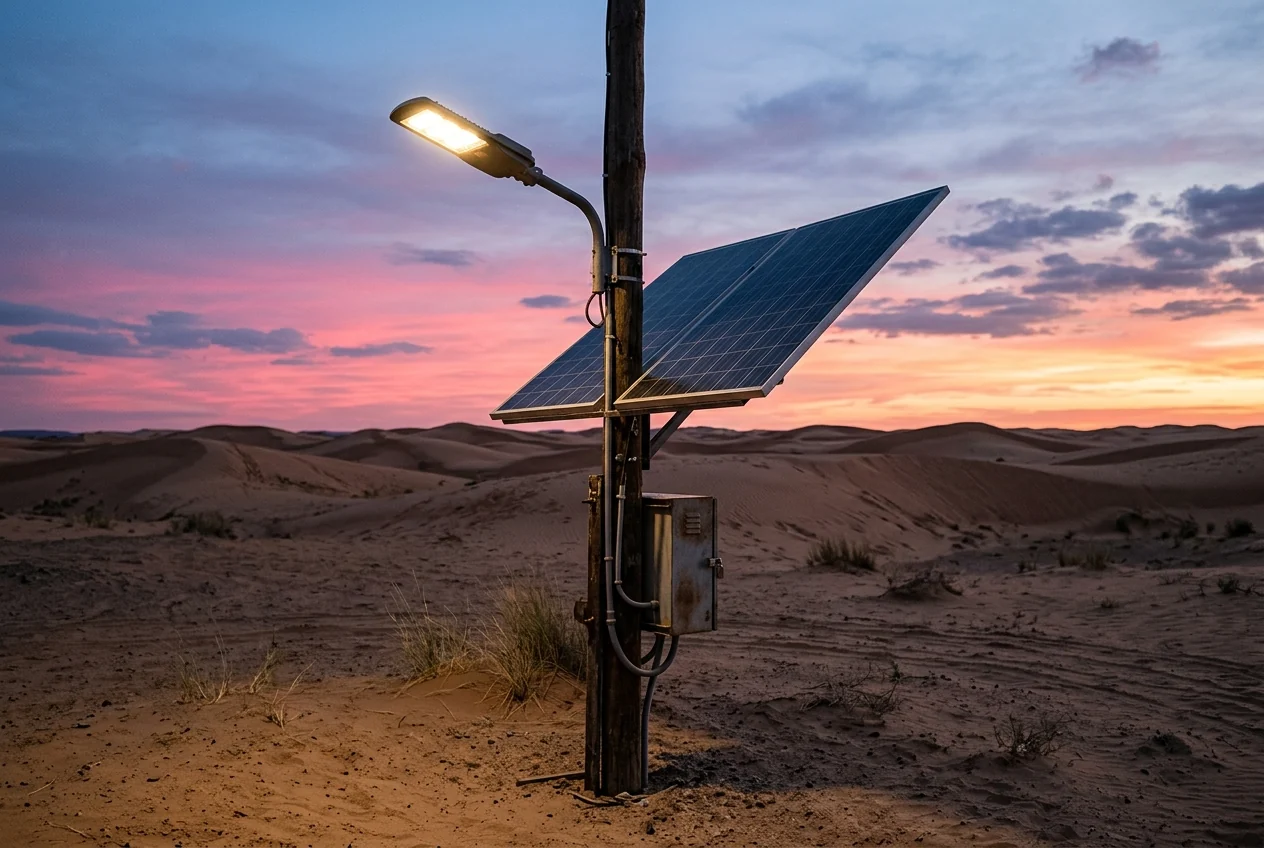
Solar LED — The Perfect Match
LED's low power consumption (80-190 lm/W) makes it the ideal light source for solar-powered systems. A 30W LED streetlight producing 4,500 lumens provides equivalent illumination to a 150W HPS lamp — reducing the solar panel and battery size by 80%. Solar LED systems are particularly compelling in the GCC where solar irradiance is among the highest globally (5.5-6.5 kWh/m²/day), grid connection costs for remote locations are high, and sustainability targets (UAE Vision 2030, Saudi Vision 2030) drive demand for renewable energy solutions.
Solar LED System Components
| 0 | 1 | 2 |
|---|---|---|
| Solar Panel | Mono/Polycrystalline, 60-300W | Monocrystalline — highest efficiency in high-temp conditions |
| Battery | LiFePO4 (LFP), Li-ion, Lead-acid | LiFePO4 — best cycle life in extreme heat (2000+ cycles at 45°C) |
| Charge Controller | MPPT, PWM | MPPT — 15-30% more harvesting than PWM in variable conditions |
| LED Fixture | 20-120W, 130+ lm/W | High-efficacy (150+ lm/W) to minimize panel/battery size |
| Pole/Structure | Steel, aluminum, composite | Hot-dip galvanized steel — corrosion resistance for coastal |
| Smart Controller | Timer, PIR, daylight sensor | Adaptive dimming — 100% until midnight, 50% until 5am |
Sizing for GCC Conditions
GCC countries benefit from exceptional solar resources but must account for extreme heat: • Panel derating: Silicon PV panels lose ~0.35-0.5% efficiency per °C above 25°C. At 60°C cell temperature (common in GCC summer), expect 12-17% loss. Oversize panels by 15-20% to compensate. • Battery temperature: LiFePO4 batteries tolerate heat far better than lithium-ion (NMC). For outdoor installations, specify batteries rated for continuous operation at 55°C+. Use ventilated battery compartments. • Autonomy: Design for 3-5 nights of autonomous operation (cloudy days are rare in GCC but dust storms can reduce generation for 2-3 consecutive days). • Cleaning: Dust accumulation can reduce panel output by 20-40% within weeks. Specify anti-soiling coatings and plan cleaning schedules.