
Lighting Control Protocols - KNX & BACnet
Building automation protocols that integrate lighting with HVAC, blinds, and security.
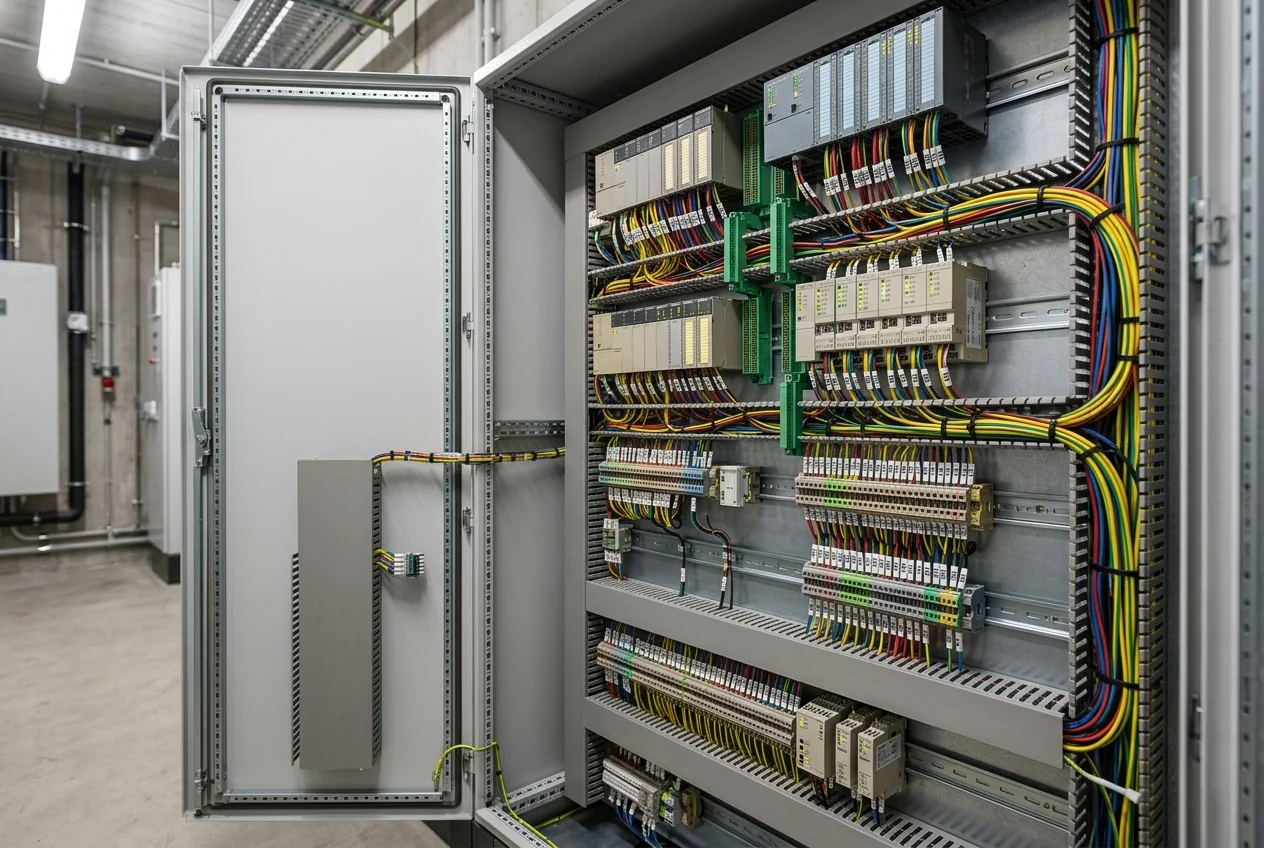
KNX: The European Standard
**KNX** is an international standard (ISO/IEC 14543) for home and building automation. It uses a dedicated **twisted-pair bus cable** (KNX TP) running at 9600 baud alongside the power wiring. Each device (switch, sensor, actuator, dimmer) gets a unique physical address. KNX excels at **distributed intelligence**: logic runs in the devices themselves, so the system works even if the server fails.
KNX vs BACnet Comparison
| feature | knx | bacnet |
|---|---|---|
| Origin | European (ISO/IEC 14543) | American (ASHRAE 135) |
| Primary Use | Lighting, blinds, HVAC, room control | Large HVAC systems, BMS, campus-scale |
| Transport | Twisted pair (TP), IP, RF, PLC | IP, MS/TP, Ethernet |
| Intelligence | Distributed (logic in devices) | Centralized (server-driven) |
| Scale | Small-large buildings (1-10,000 devices) | Large buildings-campus (100-100,000 points) |
| Programming | ETS software (certified integrators) | Vendor-specific BMS tools |
| Interoperability | 480+ manufacturers, 8000+ certified products | All major BMS vendors |
BACnet: The BMS Standard
**BACnet** (Building Automation and Control networks) is the ASHRAE standard for large building management systems. It runs over **IP networks** and is the lingua franca for connecting HVAC controllers, fire panels, access control, and lighting gateways. BACnet is **centralized**: a BMS server reads sensor data and sends commands to actuators. It excels at **campus-scale** integration across multiple buildings.
They're Complementary, Not Competing
In practice, DALI controls the fixtures, KNX controls the room (lighting + blinds + HVAC), and BACnet manages the building (BMS server integrating all subsystems). A DALI-to-KNX gateway connects individual fixtures to room-level logic. A KNX-to-BACnet gateway exposes room data to the central BMS. These three protocols form a complete building control hierarchy.
When to Use Which
**DALI alone:** Simple lighting-only projects, small offices, retail. **DALI + KNX:** Hotels, premium offices, residential with integrated blinds and HVAC. **DALI + BACnet:** Large commercial, hospitals, campus buildings with existing BMS. **KNX + BACnet:** Full building automation with room-level intelligence and campus-level management.