
Back to Academy
Technical EngineeringControls & Protocols
DALI vs 0–10V vs DMX — Controls Compared
Choosing the right lighting control protocol for your project.
7 min LEDWORLD Technical Team 732 views
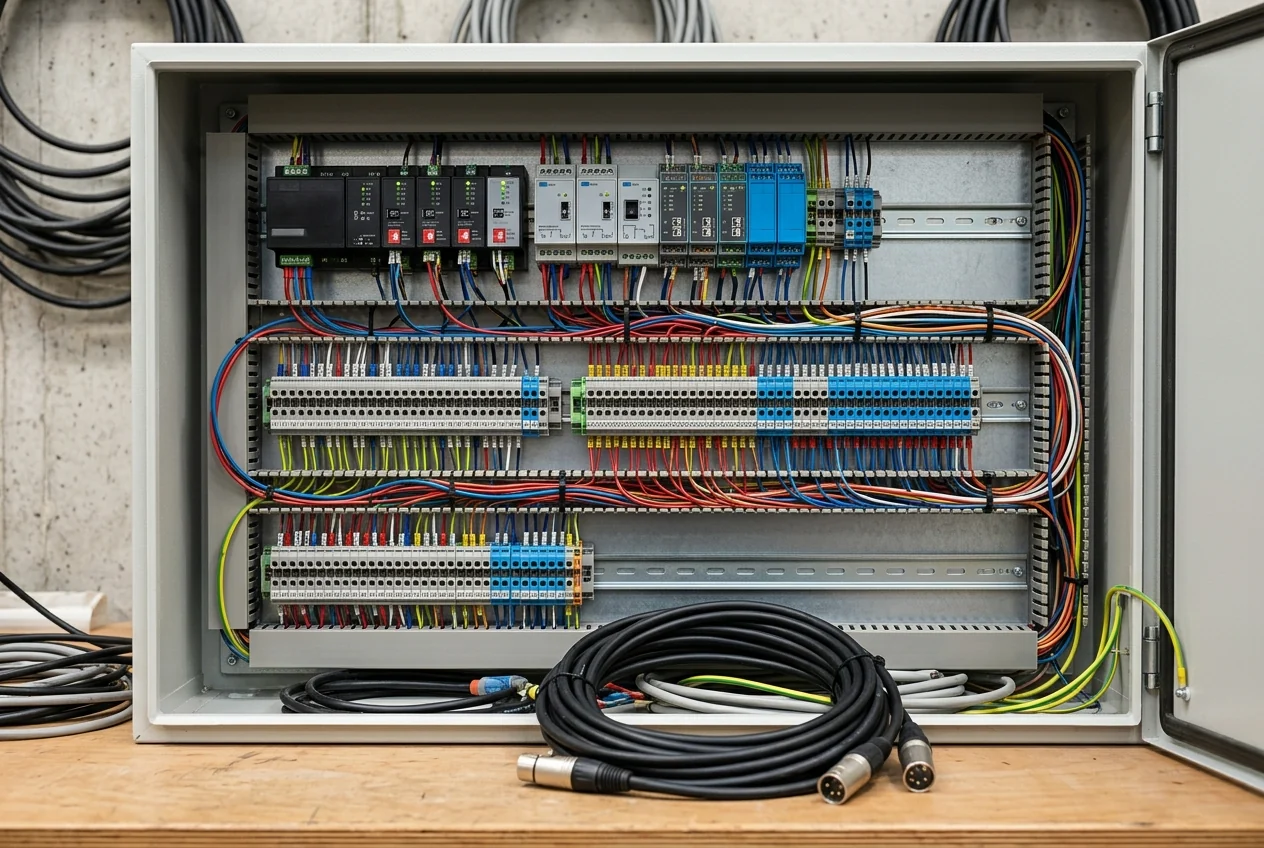

The Three Protocols
Lighting control protocols determine how dimmers, sensors, and building management systems communicate with LED drivers. The three dominant protocols each serve different project types and budgets.
Protocol Comparison
| feature | dali | v010 | dmx |
|---|---|---|---|
| Addressability | Individual (64 per bus) | Group only | Individual (512 per universe) |
| Bi-directional | Yes (status feedback) | No | No (RDM adds it) |
| Wiring | 2-wire, polarity free | 2-wire analog | 5-pin / Cat5 |
| Best for | Offices, hotels, commercial | Simple dim, budget projects | Facade, entertainment, RGB |
| Cost | Medium-high | Low | Medium |
| Complexity | Medium (commissioning needed) | Low (plug & play) | High (programming needed) |
LEDWORLD Recommendation
For most commercial and hospitality projects in the GCC: DALI-2 is the standard. It integrates with BMS systems, supports individual control, and provides energy monitoring. For simple residential dimming: 0-10V is cost-effective. For facade and entertainment: DMX provides color and animation control.
Before You Specify
Define: do you need individual fixture control or group dimming?
Check BMS compatibility — DALI integrates with most systems
Plan cable routing — DALI is polarity-free, DMX needs shielded cable
Consider future flexibility — DALI allows scene changes without rewiring
Budget for commissioning — DALI requires addressing, DMX requires programming
Common Mistakes
Using 0-10V for large projects where individual control is needed later
Not budgeting for DALI commissioning (addressing each fixture)
Mixing DALI-1 and DALI-2 devices without compatibility checks
Running DMX without proper cable termination — causes flickering
Related Tools
Frequently Asked Questions
Related Articles
DALI0-10VDMXcontrolsdimmingBMS