

RGB vs RGBW LED Strips: Understanding Color Options
The difference between RGB and RGBW LED strips, when to use each type, and how to achieve the best color effects for residential and commercial projects.

The difference between RGB and RGBW LED strips, when to use each type, and how to achieve the best color effects for residential and commercial projects.
LED strip lighting offers unparalleled flexibility for architectural lighting, accent features, and decorative effects. Understanding the options helps you choose the right product for your application.
Types of LED Strips
Common LED strip varieties:
SMD 2835
Efficient, bright, ideal for task lighting. Available in single-color white options.
SMD 5050
Larger chips, often used for RGB color-changing. Good for accent applications.
COB (Chip-on-Board)
Continuous light without visible dots. Perfect for cove lighting where strips may be visible.
Addressable
Individual LED control for dynamic effects. Used in signage and entertainment lighting.
Specification Guide
Key specifications to understand:
- LED Density: 30, 60, 120, 240 LEDs/meter - higher = smoother light
- Lumen Output: 300-2000+ lm/m depending on application
- Power: 4.8W, 9.6W, 14.4W, 24W per meter common
- Voltage: 12V DC or 24V DC (24V for longer runs)
- IP Rating: IP20 (indoor), IP65 (splash), IP67/68 (submersible)
Installation Best Practices
Achieve professional results:
- Surface Prep: Clean thoroughly with isopropyl alcohol
- Aluminum Profiles: Use for heat dissipation and clean appearance
- Power Supply Sizing: Add 20% headroom to total wattage
- Voltage Drop: Run power from both ends for strips over 5m
- Connections: Solder or use quality snap connectors
Design Applications
Popular uses for LED strips:
- Cove Lighting: Indirect illumination from ceiling perimeters
- Under Cabinet: Task lighting for kitchens and wardrobes
- Stair Lighting: Safety and accent on treads or risers
- Display Shelving: Highlighting collections and retail goods
- Signage: Channel letters and backlit graphics
Conclusion
LED strip lighting opens endless creative possibilities. Match the strip type and specification to your application, install with quality components, and enjoy the dramatic effects flexible lighting can achieve.
LEDWORLD Team
Expert lighting consultants with over 20 years of experience in architectural lighting design across UAE and GCC.
Continue Reading
View All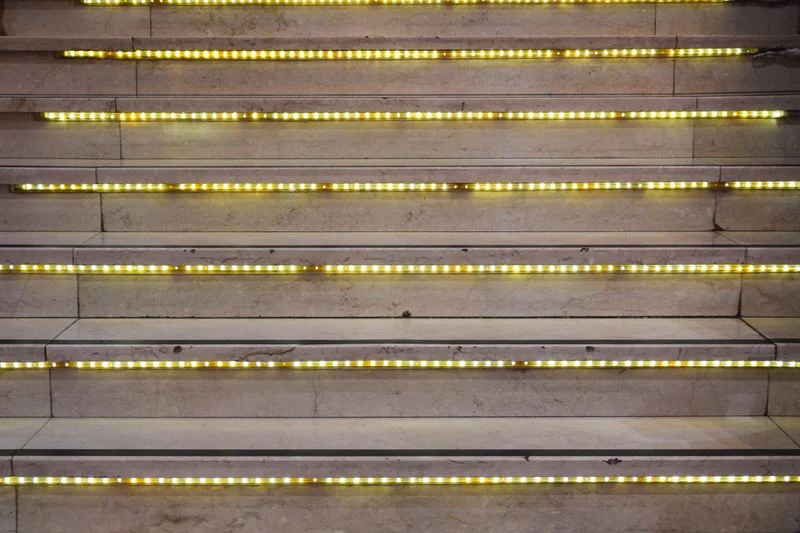
LED Strip Lights Complete Installation Guide: Cove Lighting, Under-Cabinet & More
14 min read

LED Strip Lights: Complete Buying Guide for DIY and Professional Projects
14 min read

Cove Lighting Design: Creating Architectural Drama with LED Strips
12 min read

Neon Flex vs LED Strip: Which is Better for Signage and Accents?
9 min read